


 Reading time: 7 min
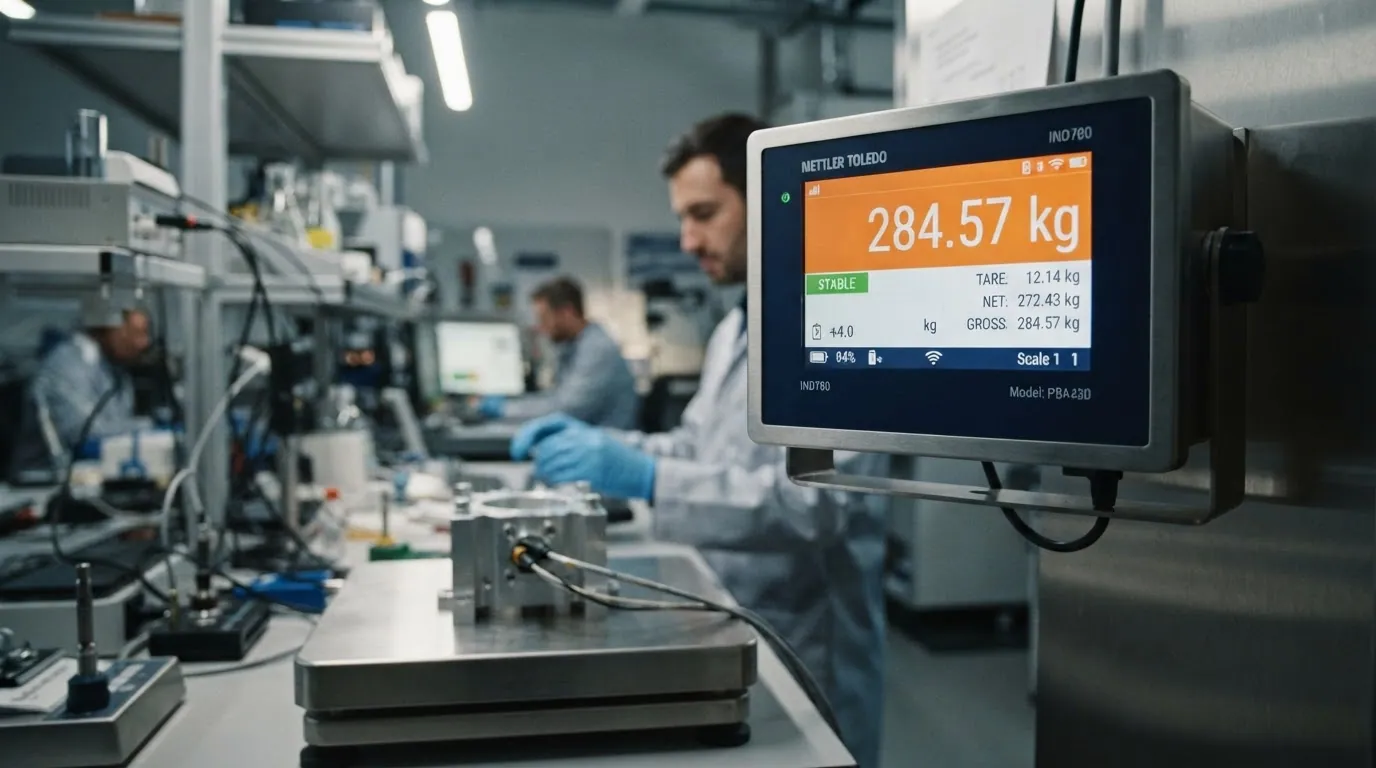
How do you read a load cell and make the weight available to a PLC or control system? For engineers, panel builders and machine manufacturers, the answer is usually a suitable load cell transmitter or weighing interface.
The Iranian market uses several related terms—weight transmitter, load cell transmitter and load cell interface card—for equipment that receives the low-level sensor signal, processes it and provides usable data or control outputs. The exact construction and capabilities still vary by product.
The Parsmega load cell transmitter range includes single- and two-channel transmitters, analogue and transistor-output versions, instruments with local displays, and equipment combining weighing with vibration control.
What does a load cell transmitter do?
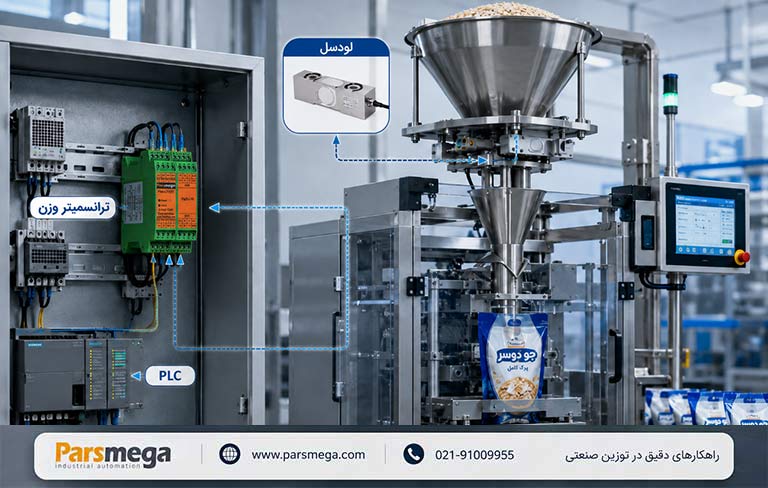
A load cell measures force or weight, but its output is normally too small for a standard PLC input. A transmitter conditions and filters the signal, applies calibration and calculates the weight. Depending on the model, it makes the result available through serial communication, Modbus, analogue output or other supported interfaces.
Some models also perform weight-based control. At a configured threshold they can signal a valve to close, stop a feeder, raise an alarm or tell the PLC that a weighing stage is complete. Output ratings and the required interface to the controlled equipment must be checked.
Why the interface matters in a control panel
In an automated process, weight is a control variable rather than just a number for an operator to read. Receiving a reliable measurement lets the system manage material in a tank, silo, hopper, package or filling station consistently.
A suitable weighing interface supports bag filling, gravimetric filling, batching, loss-in-weight or weight-based feeding arrangements, mixers and packaging machinery according to its actual control functions. Instead of an operator manually switching material flow, the controller can act on configured weight thresholds and process logic.
What is a setpoint?
A setpoint is a configured target or threshold. The instrument can activate or deactivate a supported output when the measured weight meets the configured condition.
For example, a filler targeting 1000 g may start with fast feeding, switch to a slower rate near the target, then stop feeding when the final threshold is reached. In batching, separate ingredient targets can determine when to stop one material and move to the next stage.
These functions are relevant to packaging, animal feed, powders, food production and other processes that handle defined quantities of material.
Why choose transistor outputs?
Transistor outputs provide electronic switching for suitable control signals. Compared with mechanical relays, they can suit applications needing frequent or faster switching and connection to compatible PLC inputs. The electrical output type and ratings determine what can be connected directly.
Typical functions include setpoint indication, stop commands, alarms, filling-stage changes and cycle status. A staged filling sequence might use fast feed, fine feed, weighing stop and cycle-complete signals.
Single-channel control: PM-LT11T
The PM-LT11T is a single-channel load cell transmitter with transistor outputs and configurable weight setpoints. It is intended for one weighing point or one load cell network, with PLC/HMI connectivity and control-panel installation.
Typical applications include fillers, bagging machines, scales, weigh feeders, tanks and hoppers. Use its outputs to send weight-based control signals to compatible equipment.
Two-channel control: PM-LT12T
Some systems need independent measurements from two tanks, hoppers or weighing processes. The PM-LT12T provides two simultaneous load cell channels and several transistor outputs.
In a multi-stage batch or packaging process, those outputs can support ingredient feeding, cut-off, stage transitions and completion signals through the configured control arrangement. Choose the channel count according to the actual independent measurement points, rather than simply the number of load cells connected in parallel.
Food production and packaging
Consistent weight affects portion uniformity, material use and product quality. Powders, granules, liquids, nuts, pulses, spices, flour and sugar all present weighing and filling requirements.
The transmitter supplies the weight measurement and, where supported, threshold-based commands. Where vibratory feeding is part of the machine, weighing and vibration control must work together.
For linear packaging machines needing both functions, compare the PM-WT-Pack integrated weighing and vibration controller.
Batching applications
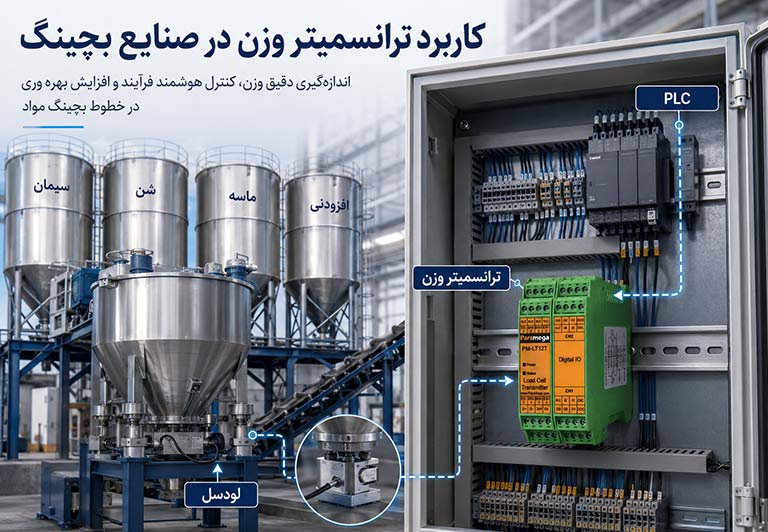
Concrete, animal feed, chemicals, powders, paint and additive processes use weight to manage ingredient quantities. The control system needs to know when to continue feeding, reduce the feed rate and move to the next stage.
A simple batch may use one weighing point. More complex systems may weigh ingredients sequentially or handle two independent processes. Select single- or two-channel electronics according to the measurement arrangement, control programme, required outputs, PLC communication and available panel space.
When is analogue output appropriate?
Not every system needs the transmitter to make setpoint decisions. A central PLC may need a continuously updated weight signal and perform all control logic itself.
Where the receiving input expects 0–10 V or 4–20 mA, compare analogue-output models such as the single-channel PM-LT11A and two-channel PM-LT12A. Digital communication is another option for transferring the measured value.
Transistor outputs suit supported threshold-based commands; analogue output or digital communication carries the weight value. The correct choice follows the control architecture.
PLC and HMI integration
Different Parsmega transmitters provide industrial interfaces such as RS485 Modbus. A compatible PLC, HMI or computer can receive weight, status and supported configuration parameters.
Communication can support monitoring, data recording, parameter changes and several devices on one network. It can also reduce separate wiring and assist troubleshooting. Check the protocol, register map and electrical interface for the selected model.
A practical selection checklist
- Input channels: one independent weighing point may use PM-LT11T or PM-LT11A; two may require PM-LT12T, PM-LT12A or PM-LT12.
- Output requirement: threshold commands, analogue measurement or digital data.
- Setpoints: filling, bagging and batching may need several weight-triggered stages.
- Integration: PLC, HMI or computer communication and configuration access.
- Installation: DIN-rail or other mounting, supply, dimensions, connections, electrical noise, environment and service access.
- Local indication: for a display on the instrument, compare models such as the PM-LTD11R.
Common selection mistakes
Choosing analogue output when the design needs threshold switching—or considering only setpoints when the PLC needs the continuous value—can complicate integration. An unsuitable channel count can make later expansion harder.
Other recurring issues are overlooked communication requirements and insufficient attention to supply, panel space, wiring, noise and service access. Check these before specifying the equipment.
Why it affects overall system quality
The load cell is only part of the weighing chain. Its signal must be processed consistently, control events must occur at the intended stage and measurements must reach the receiving system reliably.
For machine builders, that supports repeatable equipment operation. For panel builders, it simplifies a correctly matched installation. For automation engineers, it makes weight available in a usable form. In food and batching processes, these factors support consistent material quantities and reduced variation.
Frequently asked questions
Are a weight transmitter, load cell transmitter and load cell card different?
These terms often overlap in the Iranian market. Check the input, output and mounting specifications for the model you are considering.
What are transistor outputs used for?
Weight-based commands such as start, stop, alarm, cycle status or stage changes through electrically compatible PLC inputs or suitable interfaces.
Which transmitter suits a gravimetric filler?
A single weighing point with several threshold commands may suit a PM-LT11T. Two independent weighing points may call for a two-channel model such as the PM-LT12T.
Should batching use one or two channels?
One hopper or independent weighing point may need only one channel. Two independent sensor inputs or processes require an appropriate two-channel arrangement.
Can it connect to a PLC or HMI?
Suitable models provide interfaces such as RS485 Modbus. Confirm compatibility and the required data/control functions before choosing.
When should I select analogue rather than transistor output?
Use an appropriate analogue or digital measurement interface when the PLC needs to read the weight continuously. Use suitable transistor outputs when the transmitter is to issue configured threshold-based commands. Some applications need both measurement transfer and control signals.
Compare the Parsmega load cell transmitter range against the process requirements, channel count, outputs and installation conditions.