


 Reading time: 3 min
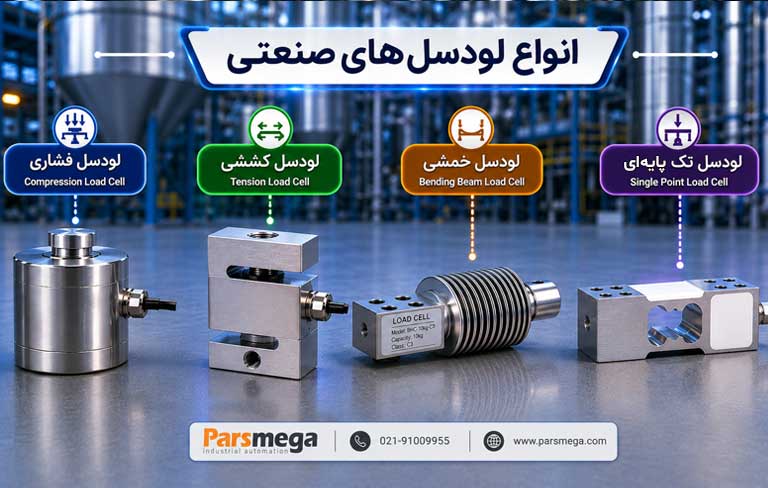
Load cells provide weight and force measurement in batching, packaging, tank weighing, food production, cement, pharmaceuticals and laboratory equipment.
What does a load cell do?
A load cell converts mechanical force into an electrical signal. The small deformation of its sensing structure is measured and processed by weighing electronics to indicate weight or support control.
How strain-gauge load cells work
- The applied load produces a small elastic deformation in the metal body.
- Bonded strain gauges change resistance.
- The bridge circuit responds to that resistance change.
- A small electrical output represents the applied force.
The output is usually at millivolt level and requires suitable measurement electronics, such as a weight indicator, weighing controller or load cell transmitter.
Main components
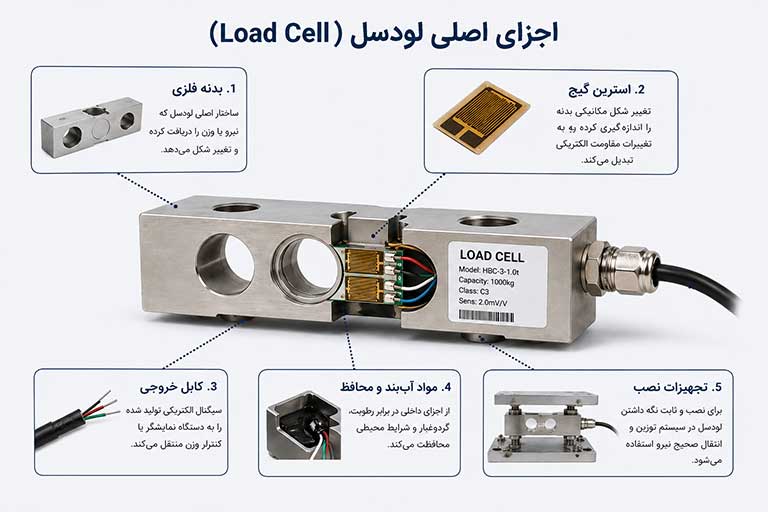
- Engineered metal sensing body
- Strain gauges
- Wheatstone bridge circuit
- Output cable
- Protective construction for the intended environment
Mechanical construction and the quality of these parts affect measurement performance. See What is a strain gauge? for the sensing principle.
Common load cell types
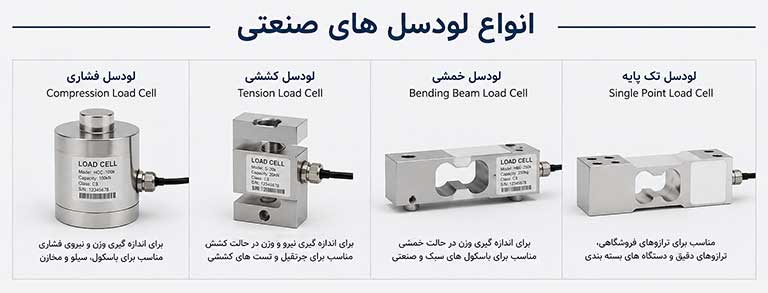
Bending beam
Common in packaging systems, lighter weighing platforms and smaller machinery.
Compression
Used where the load is applied in compression, including silos, tanks, batching systems and heavy weighbridges. The complete mounting and weighing arrangement determines suitability.
Tension
Measures tensile force in applications such as cranes, tensile testing and specialised machinery.
Single point
Common in retail scales, compact weighing platforms and packaging equipment.
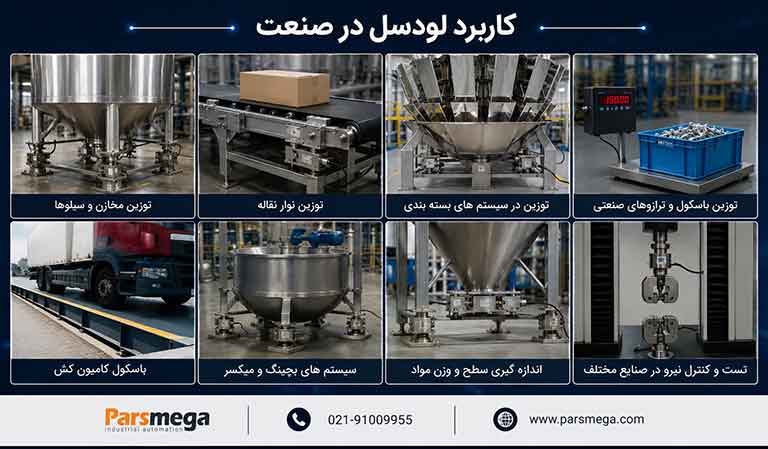
Industrial applications
Load cells support batching, automatic packaging, tank and silo weighing, food and pharmaceutical production, cement manufacture, belt weighing, laboratory/force-testing equipment and wider industrial automation.
The role of the indicator, controller and transmitter
Weighing electronics condition the low-level load cell signal, apply calibration and make the result usable. Depending on the model, they display weight, provide analogue outputs or communicate over RS485. A weighing controller can also perform supported process-control functions.
Explore Parsmega weighing products for indicators, controllers and transmitters that interface load cells with PLCs and monitoring systems.
Selection affects the whole process
In batching, errors in ingredient measurement can affect the final product. In automatic packaging, stable weight control helps reduce material waste and variation. Correctly matching the load cell with its transmitter or indicator matters as much as choosing the sensor itself.
Parsmega weighing equipment is used in industrial projects, production lines, packaging machinery and laboratory equipment. Our load cell selection guide discusses the practical selection criteria.
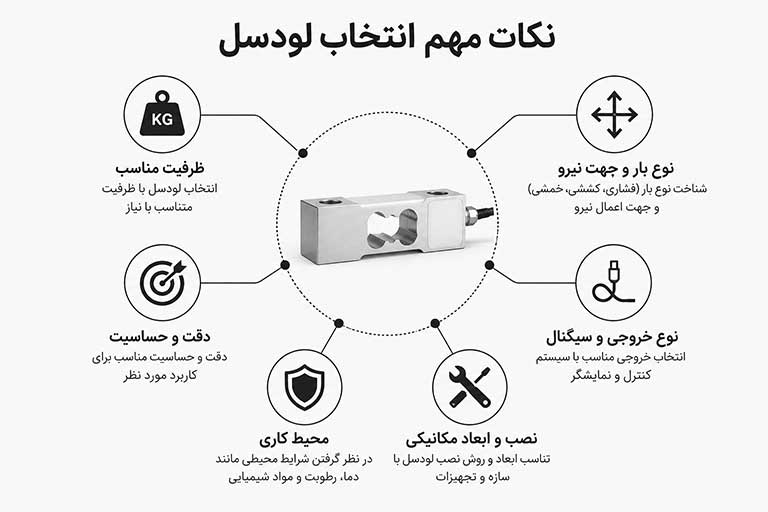
What to check
- Rated capacity and required measurement performance
- Environmental conditions, moisture and dust
- Mechanical mounting and force direction
- Vibration and electrical noise
- Output characteristics and electronic compatibility
- Ambient temperature
Review the load cell, indicator/controller and monitoring interfaces as one measurement system. Contact Parsmega for help selecting the weighing electronics for your application.